A second chapter: how Astley Vineyard became an award-winning rural business
One of the oldest commercial vineyards in the UK, a second chapter in life, and a business that could not rely on production alone. Astley Vineyard demonstrates how combining wine, tourism and accommodation can create a more sustainable rural model.
15 April 2026
Astley Vineyard
Astley Vineyard, Crundles Lane, Astley Stourport on Severn, Worcestershire, DY13 0RU
Leaving one career to build an award winning diversified vineyard offering events and tourism
We caught up with Bev Haywood on a typical working day at Astley Vineyard. There is no real divide between roles. She manages tours, oversees the shop, handles bookings, and keeps the business running day to day. It is a broad remit, but a necessary one. At this scale, everyone does a bit of everything.
Outside the vineyard, she is also vice chair of the Local Visitor Economy Advisory Group at Visit Worcestershire, giving her a wider view of how rural tourism is evolving across the county.
“We all just got stuck in,” she says. In 2017, the Haywood family did something most people talk about and never quite get round to. They walked away.
Tim Haywood, Bev’s husband, had spent years as a finance director in a PLC, commuting from Worcestershire to London, travelling internationally, and operating at a level where the pressure rarely switches off. It was a successful career by any measure, but it came with a pace that was hard to sustain indefinitely. At some point, the question shifts from what comes next to how long it can carry on.
At the same time, the rest of the family were already edging towards something different. Their son Chris was working in wine at Harvey Nichols in Knightsbridge, building a career in a completely separate world. The idea of bringing that experience back into something of their own began to take shape.
Then Astley Vineyard came up for sale. It ticked more boxes than it had any right to. Close to home. One of the oldest vineyards in the UK. A house attached. A business, of sorts, but not one that had been pushed commercially. It had history, credibility, and just enough structure to be taken seriously.
They did not spend long overthinking it. They bought it. What they actually bought, however, only became clear later.
The vineyard was producing a modest volume of wine, around five to seven thousand bottles a year. It had a reputation, particularly for its Kerner, but it was not a fully developed business. It did not have the infrastructure, the visitor offer, or the income streams needed to support it at that scale. That became obvious quickly.
They arrived in the summer, which, in hindsight, was slightly misleading. At that time of year, a vineyard looks settled. The vines are in leaf, the rows are full, and there is a sense that things are under control. It does not stay like that for long.
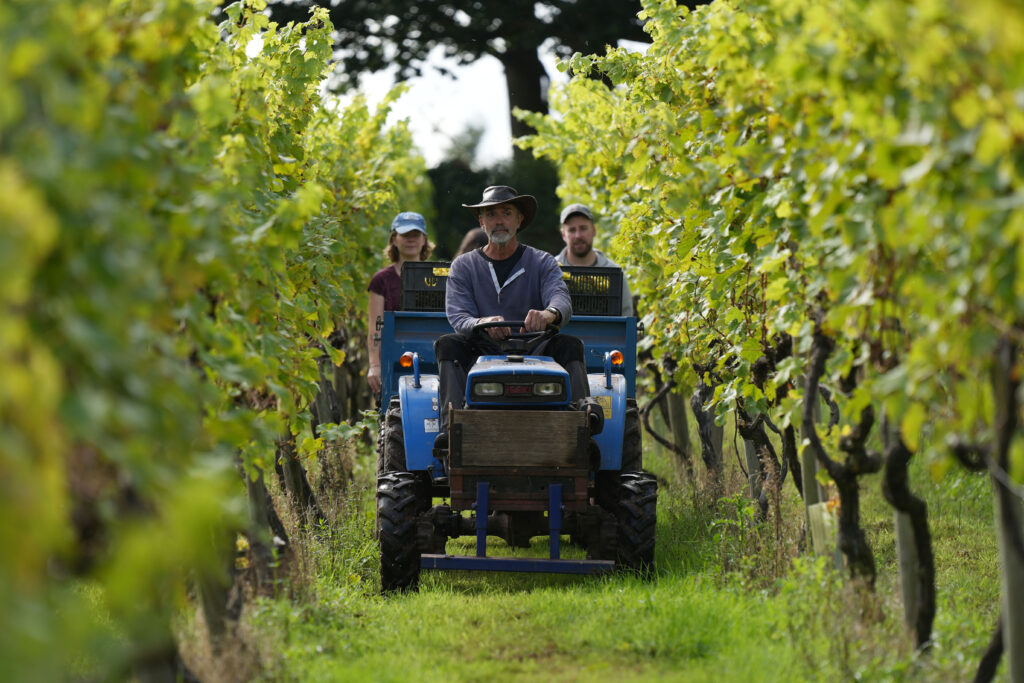
Within months, the scale of the operation became clear. This was not gardening. Everything had a window. Pruning, spraying, mowing, monitoring. Miss one and you pay for it later. There was no prior experience to fall back on, and very little time to learn slowly.
At the same time, there was no large team waiting in the background. Much of the work fell to the family themselves. Summer, in particular, becomes relentless. The idea that this might be a quieter way of life did not last.
What replaced it was something more direct. The work was physical, the outcomes visible, and the pressure constant in a different way. Weather, disease, and timing all play their part, and none of them can be negotiated with.
It also forced a more important realisation. At this scale, a vineyard on its own does not pay for itself. That point changed how they looked at everything.
Wine remained the foundation, but it could not be the whole model. Five to seven thousand bottles a year can produce something good, even distinctive, but it does not generate enough income to carry the rest of the business. If it was going to work, it needed to become something broader. That meant looking beyond the vines and towards farm diversification as a wider commercial approach.
Building a diversified rural business
The setting began to matter more. The history began to matter more. And the location, within reach of Birmingham, started to look less incidental and more useful. What had not been the main reason for buying the vineyard began to shape how it might actually function.
There was also a practical advantage. The family were there. They could meet people, talk about the wine, and explain how it was made. At a larger scale that would be difficult. Here, it became one of the business’s strengths.
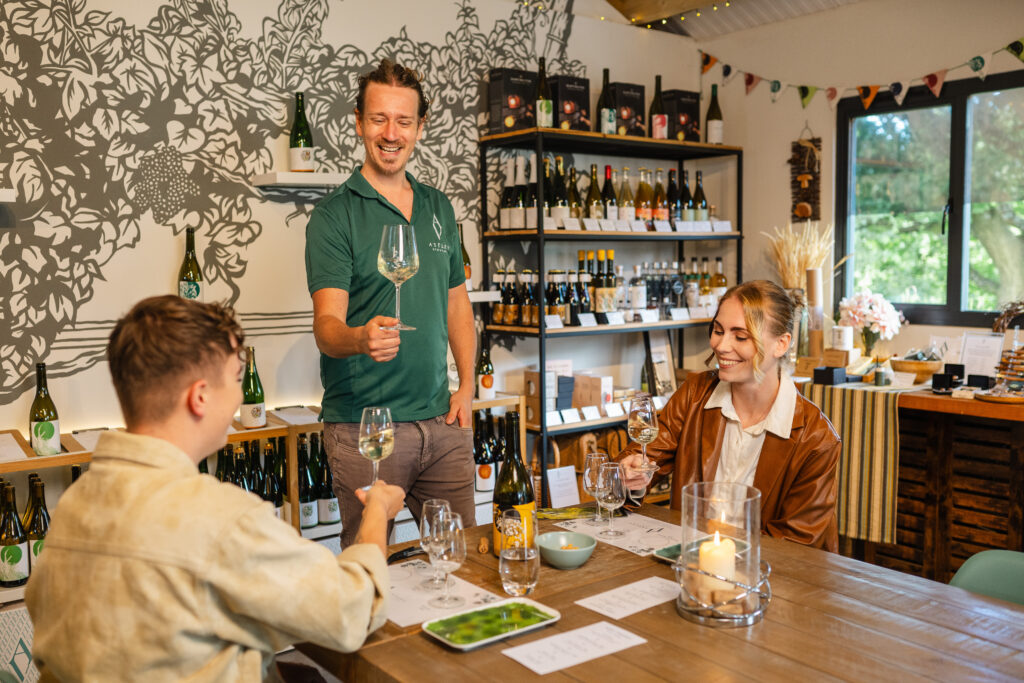
Once that clicked, the response was quick. Within the first year, the basics were put in place. A winery was established on site, giving control over production and greater flexibility. A tasting room and shop followed, creating a clear point of contact with customers and a straightforward route to sale.
The approach was simple. Visitors needed somewhere to arrive, somewhere to taste, and the opportunity to buy. There was no attempt to overcomplicate it. It just had to work, consistently.
Planning was handled early and carefully. The vineyard was positioned as a small, artisan operation rather than a large commercial development, which helped secure support locally. Conversations with planners and the parish council were dealt with up front, avoiding problems later.
At the same time, the business began to shift. Wine was still central, but it was no longer the only source of income. Direct sales improved margins, but the bigger change came from building activity around the product.
Tours and tastings were introduced and quickly became part of the core offer. The format was straightforward. Walk the vineyard, explain how it works, taste the wines. Done well, it gives people a reason to come and a reason to buy.
Demand followed. Tours began to fill. The tasting room developed steady footfall. The vineyard started to operate not just as a place that produced wine, but as somewhere people chose to visit — a clear example of rural diversification in practice.
Accommodation came later. A small number of shepherd huts were added, giving visitors the option to stay. The logic was simple. If people are willing to travel, giving them a reason to stay increases the value of each visit. A common strategy in farm diversification projects.
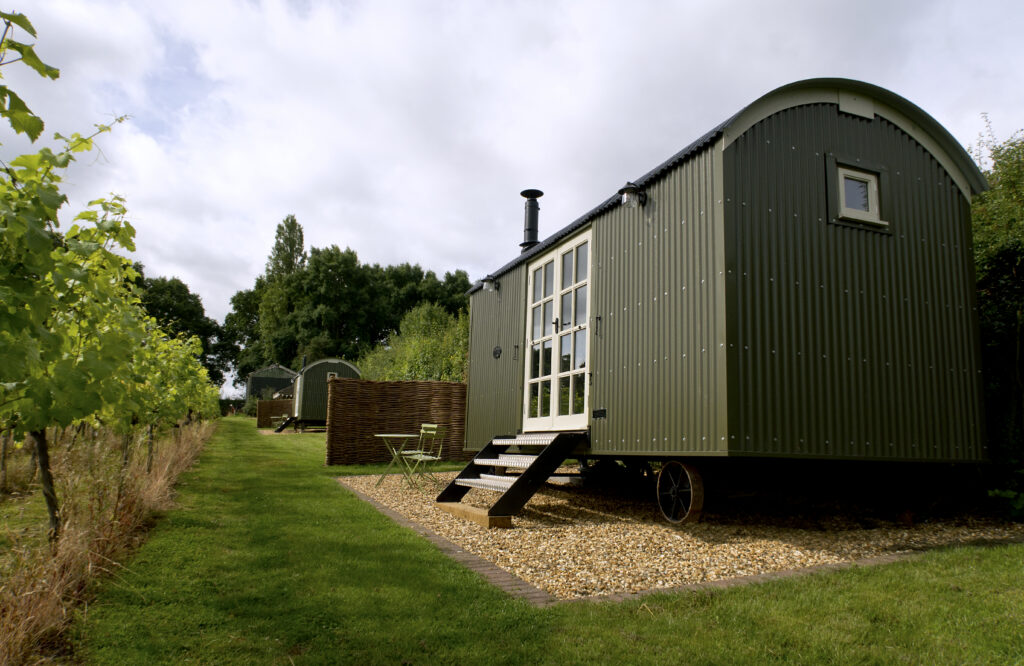
Not everything worked exactly as expected. Glamping, in particular, is requiring more effort to market than first assumed. Despite a strong social media presence, bookings did not simply appear. Platforms like Airbnb and Hipcamp are now part of the mix, and managing them has become another task to fit around everything else.
After the initial years of building and adjustment, the focus shifted. It is now less about adding new ideas and more about making the existing ones work properly. The tasting room needs to perform consistently. Tours need to maintain quality as well as demand. Accommodation needs to be filled, not just available.
That brings its own challenges. Occupancy does not take care of itself. Pricing, visibility, and presentation all require attention. Marketing becomes part of the day-to-day, alongside vineyard work and customer management. It also forces a degree of discipline. There are decisions about what not to do. A restaurant, for example, was considered. It would have been an obvious next step, but it did not fit the way the business operates. The additional complexity and staffing requirements would have changed the nature of the operation. Instead, partnerships with local caterers provide flexibility without adding permanent overhead.
Corporate bookings are now part of the mix, introduced gradually. They provide another source of income, particularly outside peak visitor periods, but they are being handled carefully.
There is a limit to how far the business can expand without becoming something else entirely or no longer being true to itself. Bev is quick to point out that the same thinking carries through into how the vineyard is run day to day.
Sustainability has been part of the approach from the beginning. Not as a formal framework, but as a way of making decisions. Reducing plastic use, working with the conditions of the vineyard, and paying attention to how the land is managed have all been part of the process.
There has also been collaboration beyond the vineyard itself. Work with the University of Worcester has looked at biodiversity, including the role of wildflowers within the vineyard. It is a small part of the overall operation, but it reflects a wider view of how the business fits into its environment.
The vineyard does not operate in isolation. It sits within a local network of suppliers, tourism businesses, and regional initiatives. That has become more important over time, particularly as visitor numbers have grown.
The aim is straightforward. To run a business that is commercially viable, manageable, and aligned with how the family want to live and work. Astley Vineyard is often described in terms of its history, and that history matters. But it does not explain what the business is today. What the Haywood family built is not just a vineyard. It is a working model, developed over time, shaped by necessity, and adjusted as they went. It did not begin with a detailed plan. It began with a decision to change direction. Everything that followed came from working out how to make that decision hold.
Visiting Astley Vineyard
For those looking to experience it first-hand, Astley Vineyard offers tours, tastings, and the chance to stay on site in its vineyard accommodation. Visitors can explore the vines, meet the people behind the business, and see how it all works in practice. More details and bookings are available via https://astleyvineyard.co.uk

Written by Adam Gray
Joint Founder of The Rural Diversification Collective
Topics covered:
How farms, estates and rural businesses are diversifying
From working farms to landed estates and rural businesses, these features explore how landowners across the UK are diversifying through glamping, events, vineyards, holiday lets, wellness retreats and more. Each one shares the thinking, decisions and experience behind a real project.
Rural Diversification Collective
A tourist tax with no cap, no coordination, and no idea who it will hurt
Rural Diversification Collective / The Glamping Show
Rural diversification takes centre stage as The Glamping Show partners with the Collective

Rural diversification events to bring landowners, farmers and rural experts together
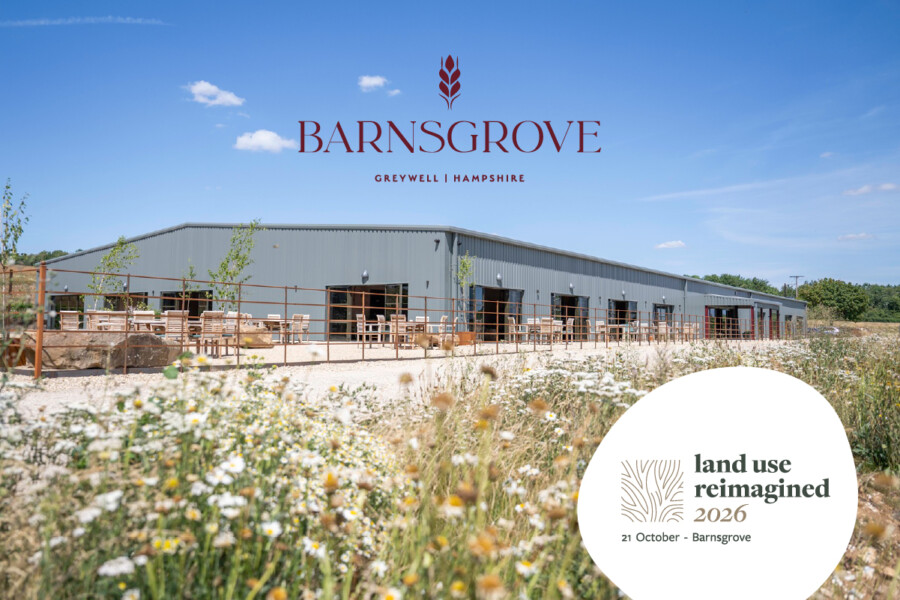
Land Use Reimagined 2026 - Rural Diversification
A focused day exploring heritage, hospitality and new uses for rural land, bringing together estate owners, planners, designers and rural specialists at a working example of successful diversification.
21 October 2026, 10:00 am
White Ln, Basingstoke RG29 1GF, UK
Search the Directory
Search the directory to find trusted consultants, advisers and specialists working with farms, estates and rural businesses across the UK. From planning and finance to design, tourism, hospitality, land use and beyond, every listing is focused on rural diversification and rural enterprise.
Are you a rural specialist? Register to be listed