British farm diversification: what Iceland’s geothermal greenhouses can teach us
A recent trip to Iceland to celebrate my wife's 40th birthday unexpectedly prompted me to reflect on farm diversification across the UK. What began as a holiday to experience Iceland's dramatic landscape and geothermal attractions became something quite different when we visited Friðheimar, an Icelandic greenhouse business that has transformed agricultural production into a complete visitor experience. Walking through the operation revealed lessons surprisingly relevant to British agriculture, and particularly to the way many UK farms approach diversification.
How a greenhouse in Iceland became a model for farm diversification
The road to Friðheimar feels increasingly improbable the closer you get. South-west Iceland is not a landscape that instinctively suggests tomato cultivation. The terrain shifts between volcanic rock, moss-covered lava fields and long stretches of open countryside shaped by geothermal activity and severe winters. Even in spring, there remains a sharpness in the air that makes the idea of Mediterranean crops feel faintly absurd.
Then the greenhouse appears.
From the outside, Friðheimar looks functional rather than theatrical. Long stretches of glass sit low against the Icelandic landscape, with little indication that one of the country’s most recognisable food and tourism businesses is operating inside. Yet stepping through the entrance feels like crossing climates entirely.
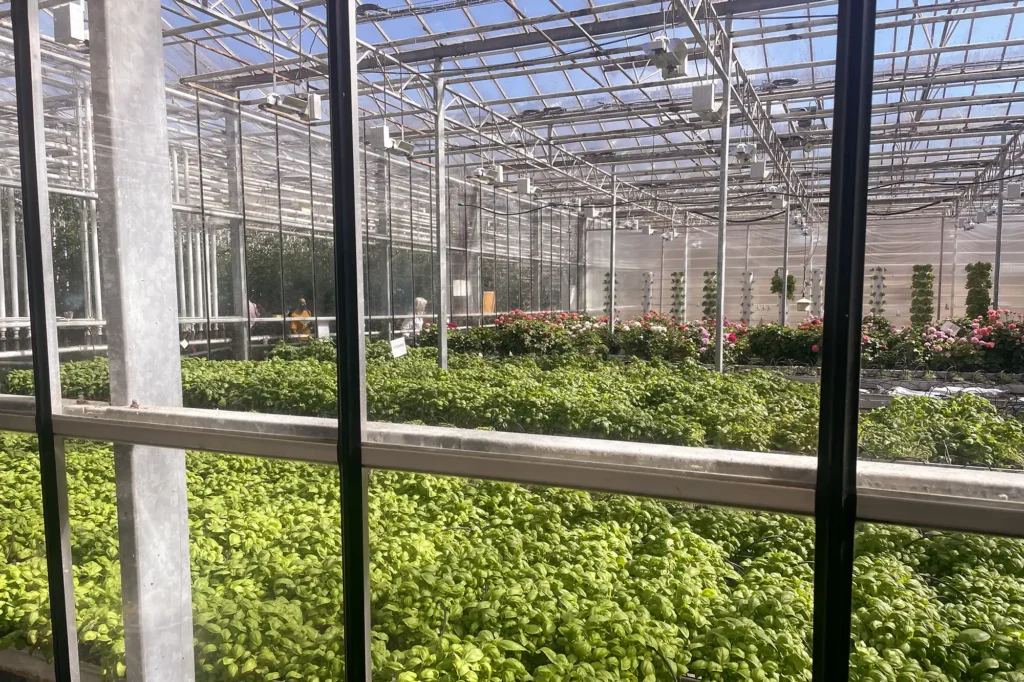
The temperature rises immediately. The air becomes humid and heavy with the smell of basil vines and tomato plants. Condensation hangs lightly against the glass while artificial grow lights glow overhead, illuminating rows of tomato plants that seem to disappear upwards into the greenhouse roof structure. Bumblebees move steadily between flowers, pollinating plants beneath a maze of irrigation lines, heating pipes and suspended wires.
And then, among the middle of it all, people are eating lunch.
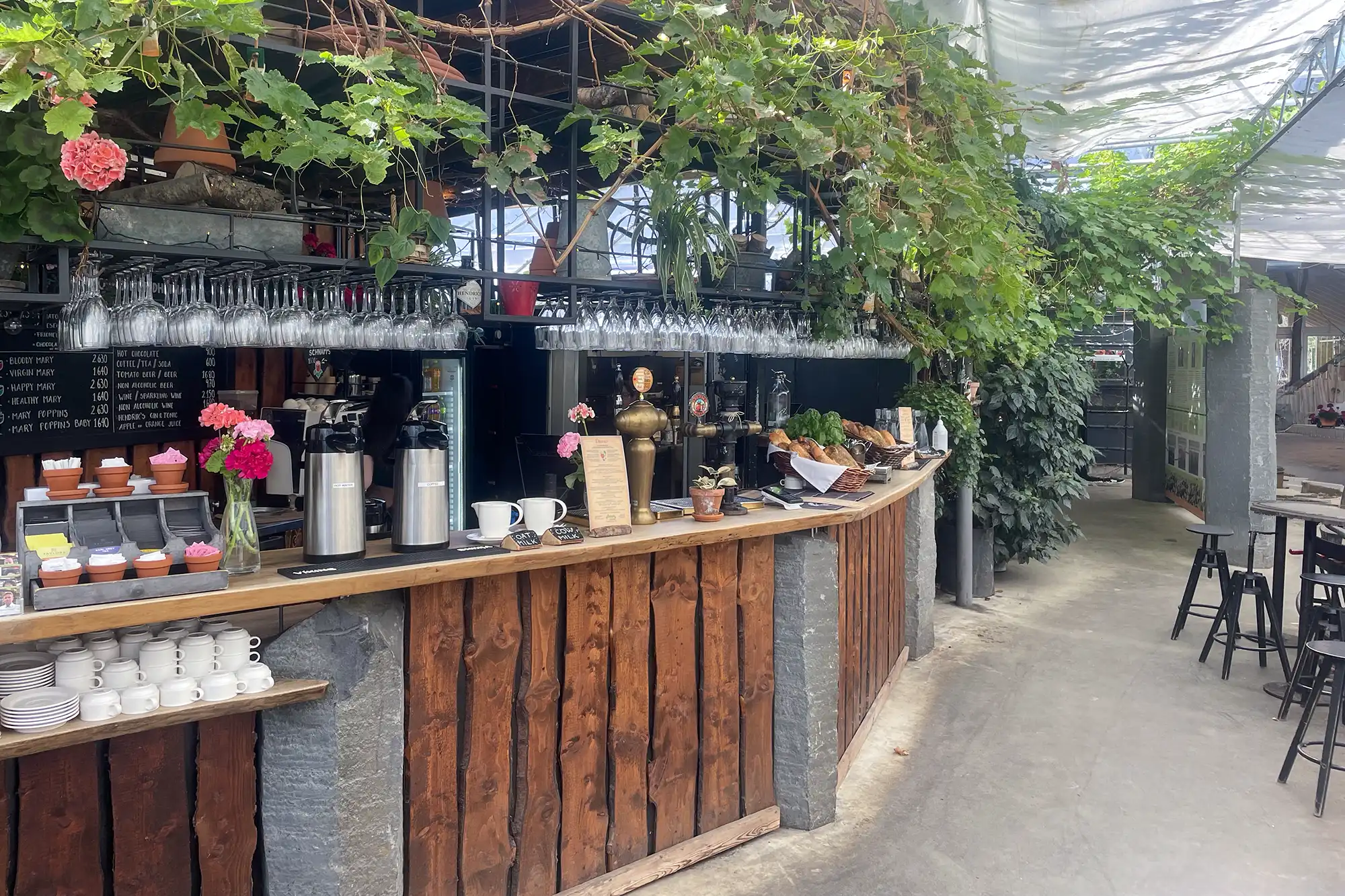
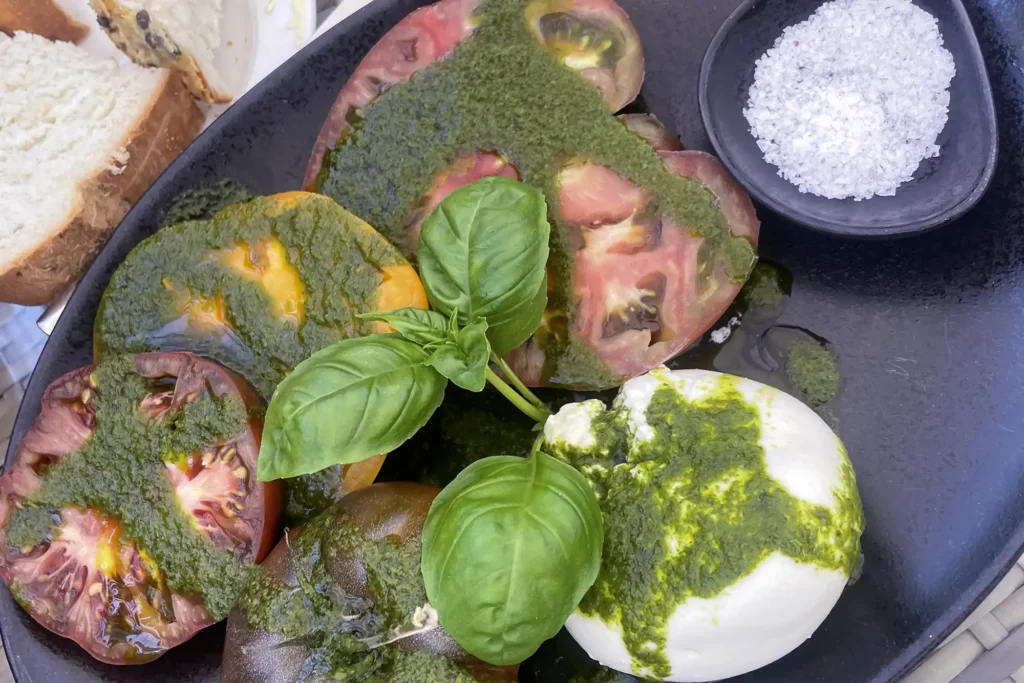
Tables sit directly between the growing rows, surrounded by tomato vines that continue producing around the diners throughout the day. Bowls of tomato soup arrive with fresh bread while visitors sip Bloody Marys beneath the same artificial lighting helping sustain production through Iceland’s long winters. Plates of burrata and heirloom tomatoes are served metres away from where the crop itself is still growing.
At first, the experience feels slightly surreal. Iceland exists in the imagination as a place of glaciers, black sand beaches and geothermal lagoons rather than greenhouse horticulture. Yet Friðheimar has quietly become one of the country’s most visited agricultural destinations by turning precisely that contradiction into the attraction itself.
What initially appears to be a greenhouse with a restaurant attached reveals itself, quite quickly, to be something far more sophisticated: a horticultural business that has transformed food production into a complete visitor experience.
Geothermal agriculture and technical sophistication
Greenhouse horticulture has existed in Iceland for decades, though largely out of necessity rather than novelty. With a climate that makes year-round food production difficult, the country turned early towards geothermal energy as a way of reducing dependence on imported produce. What emerged was one of Europe’s more unusual agricultural sectors: tomatoes, cucumbers and herbs grown beneath artificial lighting in conditions that would otherwise make cultivation impossible for much of the year.
Friðheimar sits at the centre of that story.
The business produces up to two tonnes of tomatoes per day, grown year-round using geothermal heat, renewable electricity and highly controlled growing systems. Beneath the atmosphere experienced by visitors lies an operation that is remarkably technical. Each greenhouse is climate controlled, monitoring heat, humidity, lighting and irrigation levels continuously. Weather stations mounted on the roof measure wind, temperature and sunlight, allowing artificial lighting to adjust automatically depending on conditions outside.
The geothermal infrastructure itself is extraordinary. Hot water arrives from a borehole around 200 metres from the greenhouse and enters the system at approximately 95°C. Around 100,000 tonnes of geothermal water pass through the operation annually in order to maintain growing conditions beneath glass thin enough to maximise Iceland’s limited winter sunlight.
What makes the experience particularly compelling, however, is that none of this complexity is hidden away from visitors. Most agricultural businesses separate production from hospitality. At Friðheimar, the mechanics of cultivation remain fully visible. Irrigation systems run above dining tables. Heating pipes pass beneath walkways. Bumblebees pollinate tomato flowers while visitors eat lunch among the crop itself. Rather than disguising the industrial realities of food production, the greenhouse incorporates them into the atmosphere.
That transparency feels increasingly relevant. Across much of Europe, consumers have become disconnected from how food is produced, while agriculture itself has often become commercially squeezed between rising costs and narrow wholesale margins. Friðheimar appears to have recognised early that modern visitors are not simply interested in consuming food, but in experiencing production and understanding where it comes from.
Turning production into farm diversification
Friðheimar did not begin as a polished tourism concept. When Knútur and Helena purchased the property in 1995, the site consisted of two existing greenhouses and a largely empty residence. What followed was not rapid expansion, but gradual layering. Additional greenhouse space was built, older structures were renovated and the business settled into year-round tomato production. By the early 2000s, artificial lighting had been introduced to support continuous growing through Iceland’s darker months.
Over time, tourism emerged less as a separate business and more as a natural extension of the operation already taking shape. Between 2007 and 2013, the business expanded beyond horticulture into visitor experiences. A horse riding centre was developed alongside guided greenhouse visits. Soon after, dining tables appeared among the tomato plants. The restaurant evolved directly from the greenhouse environment rather than being constructed separately from it. Each stage appears connected to the last. The horse shows increased visitor dwell time. The greenhouse tours deepened interest in production. The restaurant allowed the business to capture more value directly from the crop itself. More recently, the opening of Vínstofa Friðheima, a wine bar and bistro located inside one of the farm’s older greenhouses, has pushed the business further towards becoming an all-day destination rather than simply a lunch stop.
Today, Friðheimar employs more than 100 full-time staff across horticulture, hospitality and tourism. Despite that growth, the business still feels unmistakably family-led, with multiple generations remaining actively involved in the day-to-day direction of the operation.
Even the menu reflects that philosophy. Tomatoes are not treated as ingredients so much as the central identity of the business. Tomato soup arrives with freshly baked bread. Burrata is paired with heirloom tomatoes grown metres away. Tomato sorbets, tomato jams and even tomato ice cream appear on the dessert menu, extending the greenhouse narrative through the entire visitor experience. Importantly, the operation avoids feeling manufactured. The greenhouse remains a functioning agricultural business first and foremost. That authenticity is precisely what gives the experience its strength.
The same philosophy appears throughout the wider business. Old greenhouses are not abandoned once newer facilities are constructed. Instead, they are adapted into wine bars, restaurants and event spaces. Visitor curiosity becomes another usable resource. Heat, excess produce, older buildings and tourism demand are all folded back into the business rather than treated separately. Tomatoes that fail to meet supermarket grading standards move directly into the restaurant kitchen instead of being discarded. In many ways, Friðheimar operates less like a traditional farm and more like a vertically integrated rural ecosystem.
What British farms can learn from farm diversification models
Britain is unlikely to produce many geothermal tomato greenhouses any time soon. Iceland’s energy infrastructure, volcanic landscape and climate conditions are too specific for direct comparison. Yet focusing too heavily on the geothermal element risks missing the more important lesson behind Friðheimar’s success.
The real innovation is not the heat source. It is the recognition that agriculture itself can become the attraction.
Across much of the UK, rural diversification has traditionally followed relatively familiar paths. Holiday accommodation, weddings, cafés and farm shops have become increasingly common as landowners search for additional income streams beyond primary production. What Friðheimar demonstrates particularly well, however, is the value of building those experiences around the operational reality of the farm itself rather than alongside it.
The greenhouse remains central throughout everything the business does. Visitors are not distracted away from production. They are immersed within it.
That feels increasingly significant. Modern consumers, particularly urban visitors, are often several generations removed from agriculture. For many, even relatively ordinary farming processes now hold a degree of fascination simply because they are unfamiliar. Vineyards, dairies, flower farms, cheesemakers, orchards and market gardens all possess forms of experiential value that many operators perhaps underestimate because they see them every day.
The strongest farm diversification opportunities may not always require entirely new ideas. Sometimes they emerge from looking differently at what already exists on the farm. Visitors increasingly value authenticity over polish. Many rural businesses still attempt to hide operational realities from guests, treating production areas as something separate from hospitality. Friðheimar appears to have realised the opposite: the workings of the farm are precisely what make the experience memorable.
There is also a broader commercial lesson here around layering revenue streams. At Friðheimar, the same crop supports wholesale production, hospitality, tourism, retail products and online sales simultaneously. The greenhouse itself generates agricultural output while also functioning as dining room, visitor attraction and marketing asset. Horse shows broaden audience appeal. The wine bar extends dwell time. Retail products allow the experience to continue beyond the visit itself. None of those layers replace agriculture. They strengthen its economic resilience.
That feels particularly relevant at a time when many British farms continue facing pressure from rising costs, labour shortages and volatile commodity markets. Diversification is often discussed as though it means moving away from farming altogether. Friðheimar suggests something slightly different: that the future may lie in allowing more people closer to the agricultural process itself.
Many British farms already possess the harder thing to create: authenticity. Visitors are increasingly searching for experiences that feel rooted in place and connected to real working environments. What Friðheimar demonstrates particularly well is that those processes do not necessarily need to be hidden away behind the scenes. In the right setting, they can become part of the experience itself.
The strongest diversification ideas often begin with recognising that what feels ordinary to the farmer may be extraordinary to everyone else.
Written by Adam Gray
Joint Founder of The Rural Diversification Collective
Topics covered:
Agritourism / Farm Diversification / Retail / Visitor Experience
How farms, estates and rural businesses are diversifying
From working farms to landed estates and rural businesses, these features explore how landowners across the UK are diversifying through glamping, events, vineyards, holiday lets, wellness retreats and more. Each one shares the thinking, decisions and experience behind a real project.
Rural Diversification Collective
A tourist tax with no cap, no coordination, and no idea who it will hurt
Rural Diversification Collective / The Glamping Show
Rural diversification takes centre stage as The Glamping Show partners with the Collective
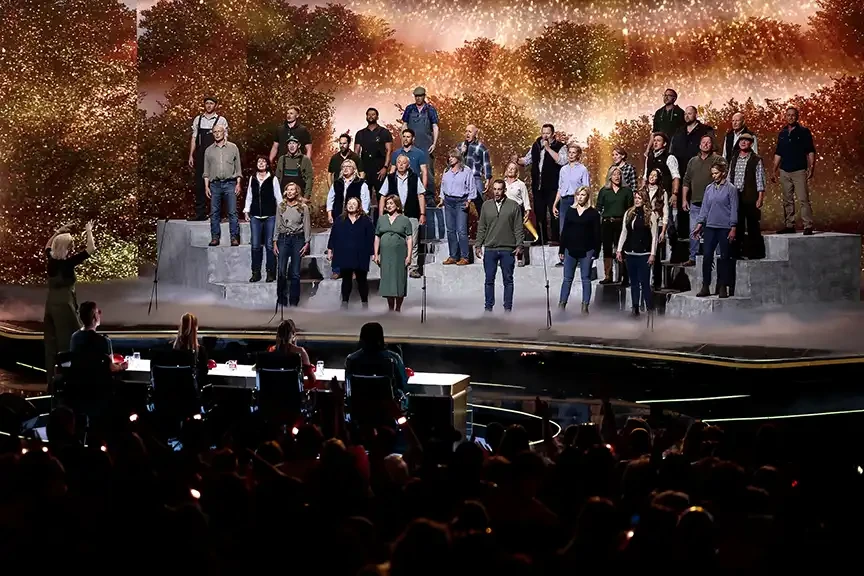

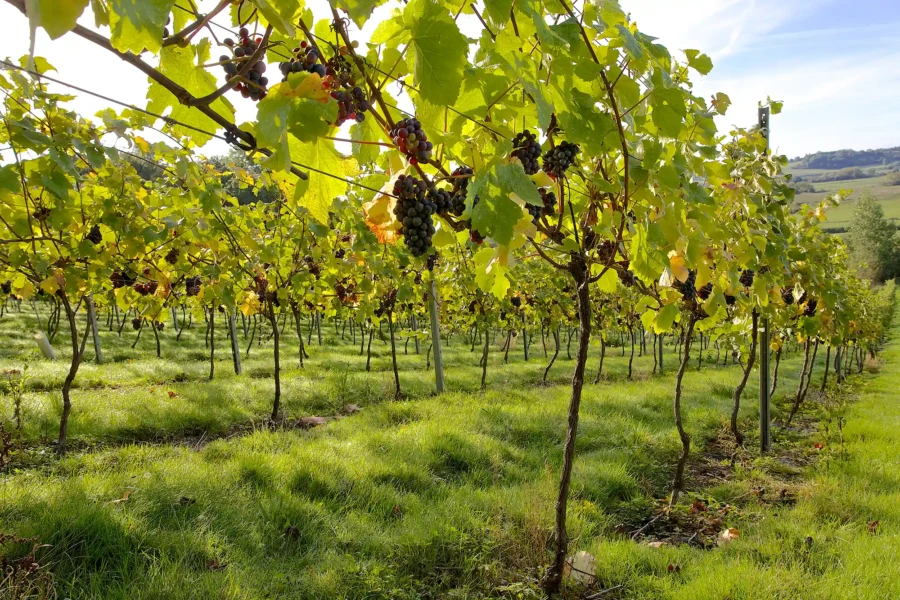
Rural diversification events to bring landowners, farmers and rural experts together
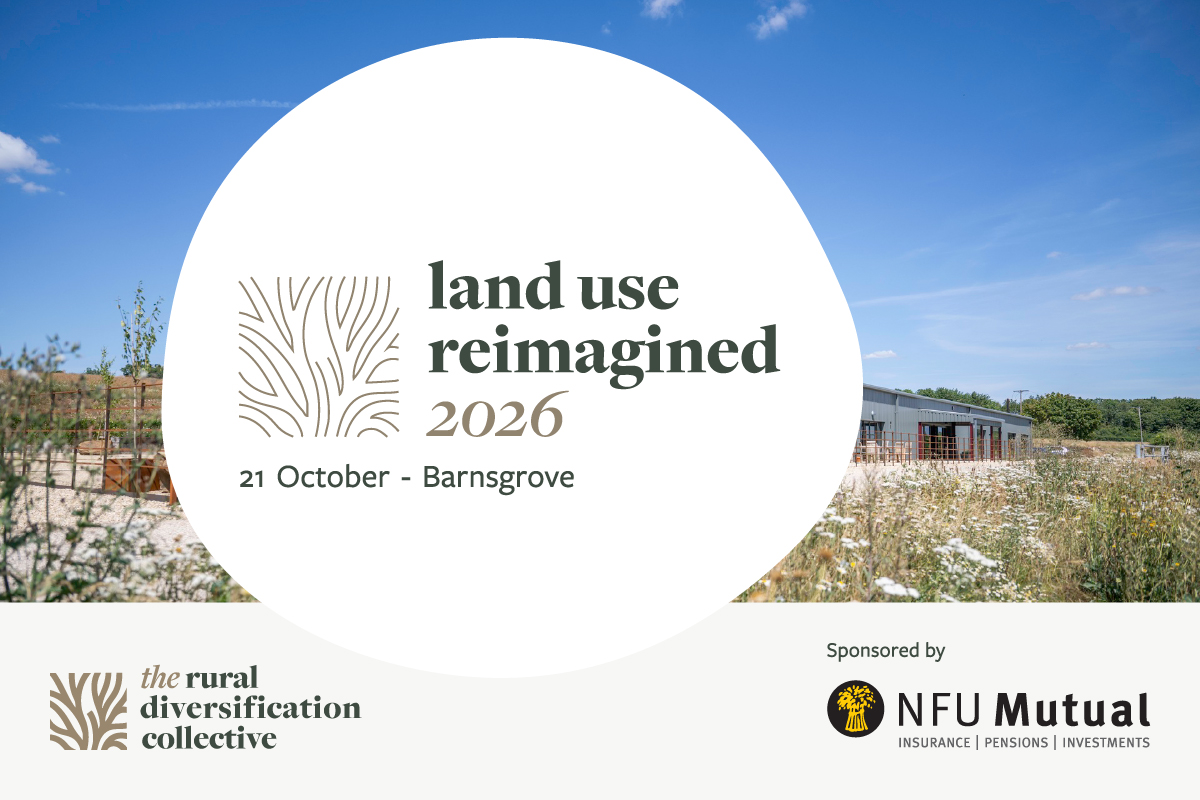
Land Use Reimagined 2026 - Rural Diversification
A focused day exploring heritage, hospitality and new uses for rural land, bringing together estate owners, planners, designers and rural specialists at a working example of successful diversification.
21 October 2026, 10:00 am
White Ln, Basingstoke RG29 1GF, UK
Search the Directory
Search the directory to find trusted consultants, advisers and specialists working with farms, estates and rural businesses across the UK. From planning and finance to design, tourism, hospitality, land use and beyond, every listing is focused on rural diversification and rural enterprise.
Are you a rural specialist? Register to be listed