From family orchard to boutique glamping retreat: Orchard Blossom, Worcestershire
How a Vale of Evesham orchard became a rural diversification business rooted in family memory, and what it took to get there
12 May 2026
Orchard Blossom
Orchard Blossom, The Land, Blacksmiths Lane, Cropthorne, Worcestershire WR10 3LX
Orchard Blossom near Cropthorne shows how a small family orchard can become a viable glamping farm business while preserving the character and history of the land it grows from
The Vale of Evesham has long been shaped by fruit trees. For generations its orchards and market gardens have supplied kitchens across the country, their neat rows stretching across fertile Worcestershire soil beneath the watchful presence of Bredon Hill. In one small orchard near the village of Cropthorne, however, the story of the land is quietly evolving. Where fruit once grew for market crates, bell tents now sit among the trees.
The orchard originally belonged to Helen Christopher’s father, John Butler, whom she describes simply as “a man of the land.” In the Vale he was known as something of a character. The orchard was his sanctuary, a place where he could grow produce, escape the noise of everyday life and occasionally share a glass of his famously strong homemade moonshine with friends beneath the trees. When he died four years ago, the land passed to Helen and her daughter Emma. Faced with the question of what should become of it, the family decided it deserved more than quiet decline.
“It was Dad’s place,” Helen says. “We wanted to keep that spirit alive.”
At the time, Helen’s own career was far removed from orchards. For more than twenty years she had worked in corporate marketing within the financial services sector, operating in the ordered world of boardrooms, strategy meetings and client campaigns. The move into rural entrepreneurship required a significant shift in mindset.
“It really has been boardroom to wellies,” she says.
Glamping planning permission and the reality of rural infrastructure
The reality of creating Orchard Blossom proved far less romantic than the finished result might suggest. Turning a family orchard into a glamping retreat required almost a year of planning work, feasibility studies and discussions with planners before change of use permission was secured.
Helen commissioned a feasibility study with glamping consultancy Glampitect before committing to the project. “It helped us understand what the project really involved,” she explains. “It is not just about putting a tent in a field. There are utilities, drainage, groundworks and all the practical things that make the site function properly.”
Even with careful planning, the work itself was not always straightforward. One particularly wet winter left large areas of the orchard waterlogged. Trenches had to be dug, services installed and infrastructure carefully planned around ground conditions that changed week to week. “At times it felt like we were fighting the mud,” Helen recalls.
For landowners considering how to start glamping on a farm or orchard, Helen’s experience is a useful reminder that groundworks, utilities and services often represent the largest and least visible costs in the development budget. Understanding the full infrastructure picture before committing to a scheme can make the difference between a project that remains viable and one that runs out of capital before it opens.
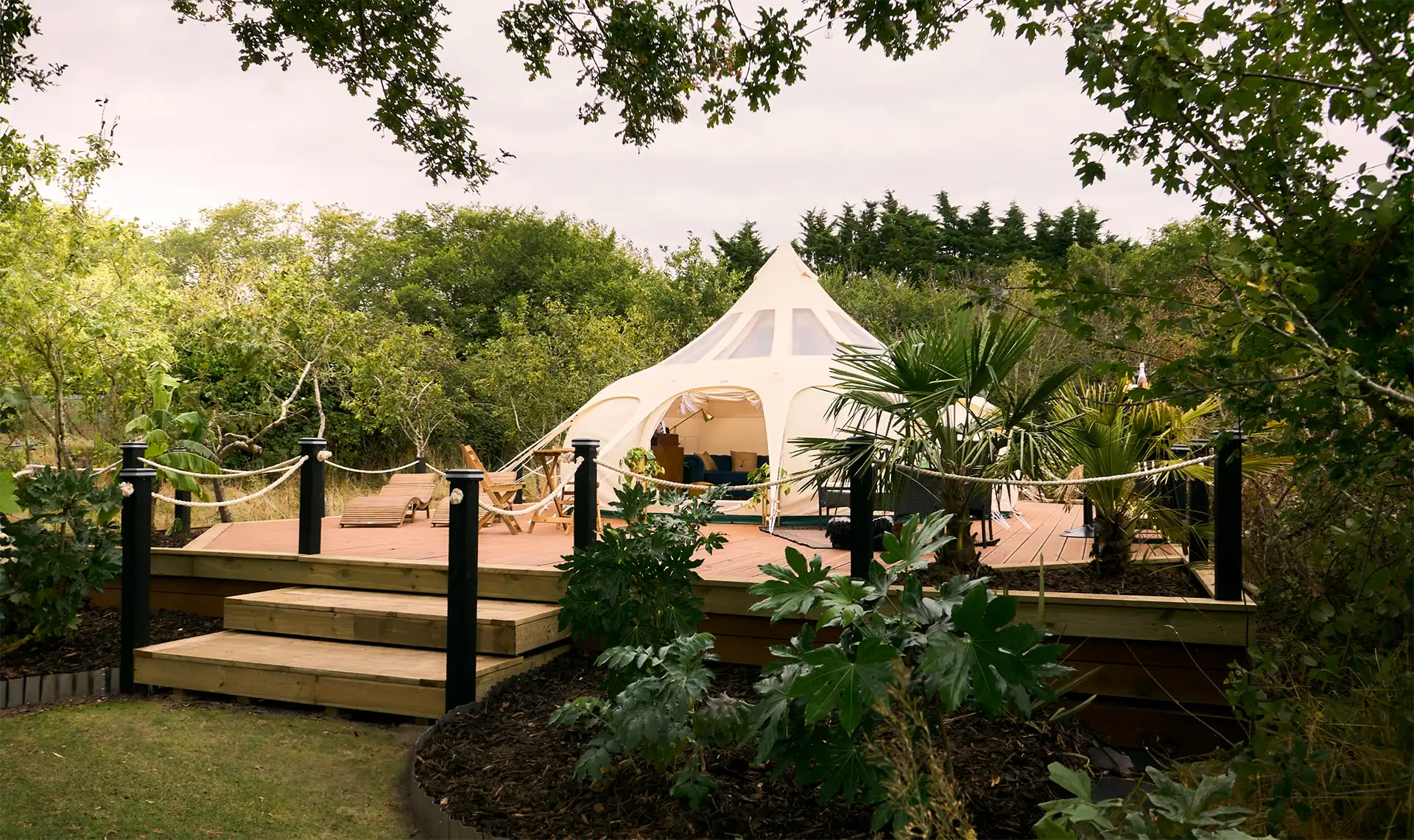
Planning permission at Orchard Blossom allows for five glamping pitches. Helen has deliberately chosen to develop gradually. Two tents are operational so far, allowing the business to establish itself while preserving the quiet character of the site.
How the orchard’s history became the visitor experience
Both tents reflect the orchard’s past. The first, Yellow Egg, takes its name from the Pershore Yellow Egg plum, one of the varieties Helen’s father grew during the orchard’s most productive years. The second, Victoria Plum, pays tribute to Helen’s late mother. The names are not simply branding choices. They are a reminder that the orchard remains rooted in family history.
Each pitch features a spacious Lotus Belle Stargazer tent with transparent roof panels that allow guests to watch the night sky from their beds. Private garden spaces, fire pits and outdoor baths add comfort without separating visitors from the natural setting. With only two tents spread across four acres, the emphasis remains firmly on space and tranquillity.
“We wanted it to feel like somewhere people can genuinely switch off,” Helen says.
The orchard itself continues to shape the experience. During the first season, guests were invited to plant a tree, helping regenerate the orchard while becoming part of its ongoing story. New plum trees, including the Pershore Yellow Egg variety, are gradually being introduced alongside the existing fruit stock. Looking ahead, Helen hopes the orchard will reconnect with the Vale of Evesham’s wider food heritage through pick your own produce and partnerships with local food banks.
This approach, building the visitor experience from the specific character of the land rather than importing a generic glamping format onto it, is one of the clearest farm diversification ideas to emerge from the project. Guests are not simply buying a night under canvas. They are buying into a place with a particular history and atmosphere.
Rural diversification grants and the value of local support
The project benefited from financial support through the Rural England Prosperity Fund, delivered by Wychavon District Council. Advice from the regional Growth Hub and planning consultants provided additional guidance during the early stages.
“The county council were amazing,” Helen says. “They helped us understand the process and pointed us in the right direction.”
For landowners exploring rural diversification grants UK, Helen’s experience highlights the value of engaging with local authority support early. Funding streams such as the Rural England Prosperity Fund are not always widely publicised, and regional Growth Hubs can provide a useful first point of contact for understanding what is available in a given area.
What the market actually looked like
Orchard Blossom’s early trading has not unfolded exactly as expected, in ways that offer useful intelligence for anyone planning a similar project.
“We thought most of our guests would come from cities,” Helen says. “But actually locals have been a really strong market for us.”
Social media has played a central role in reaching those visitors. Facebook and Instagram have generated a steady stream of enquiries and bookings, with strong early reviews and repeat visits beginning to build momentum. On one day alone, five bookings arrived within twenty four hours.
The local market finding a glamping business before the urban weekend-break market does is a pattern seen across a number of rural tourism diversification projects. It underlines the importance of not narrowing the marketing strategy too early based on assumptions about who the customer will be.
Farm diversification lessons from Orchard Blossom
Several observations emerge from Helen’s experience that are directly applicable to other landowners considering a similar project.
Starting with a professional feasibility study reduced the risk of the overall investment. Glampitect’s early involvement helped Helen understand the full scope of what was required before significant capital was committed, and surfaced infrastructure requirements that would not have been obvious without specialist input.
Gradual development preserved both the character of the site and the viability of the business. Beginning with two tents rather than the five permitted by planning allowed Helen to refine the operation before scaling. In a sector where the atmosphere of the site is the primary product, protecting that atmosphere during development is as important as the development itself.
The land’s own history proved to be a commercial asset. Rather than overlaying a generic hospitality format onto the orchard, the project drew its identity directly from what was already there. The names of the tents, the tree planting, the fruit heritage of the site: these details give Orchard Blossom a distinctiveness that a purpose-built glamping operation cannot replicate.
And local support, both financial and advisory, made a material difference. The Rural England Prosperity Fund grant and Growth Hub guidance are resources that many landowners do not pursue, either because they are unaware of them or because the application process appears daunting. Helen’s experience suggests the effort is worthwhile.
For more farm diversification ideas and examples of how smaller rural sites can be developed carefully over time, explore the farm diversification section of this site. Landowners considering glamping or rural tourism projects can find specialist consultants and advisers through the Rural Diversification Directory.

Written by Adam Gray
Joint Founder of The Rural Diversification Collective
Topics covered:
How farms, estates and rural businesses are diversifying
From working farms to landed estates and rural businesses, these features explore how landowners across the UK are diversifying through glamping, events, vineyards, holiday lets, wellness retreats and more. Each one shares the thinking, decisions and experience behind a real project.
Rural Diversification Collective
A tourist tax with no cap, no coordination, and no idea who it will hurt
Rural Diversification Collective / The Glamping Show
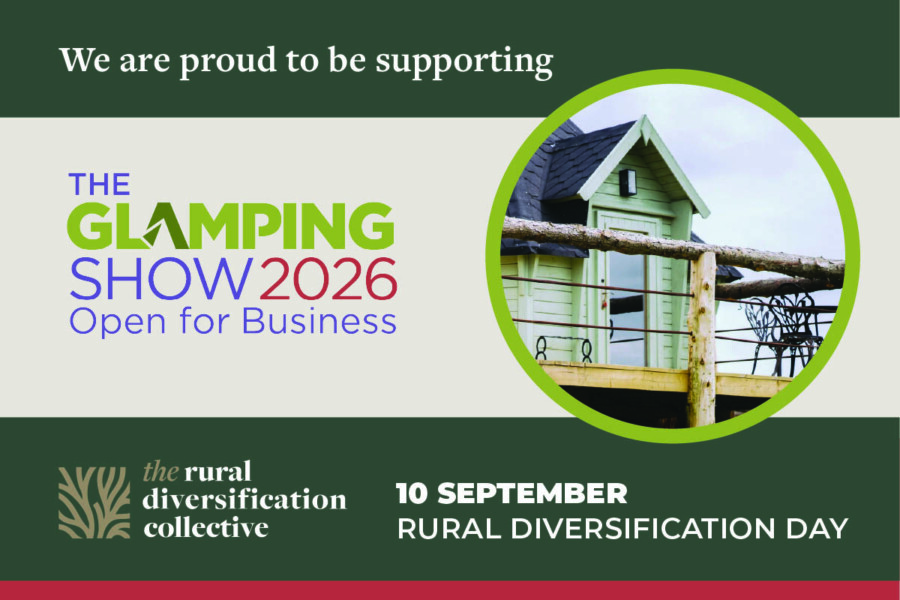
Rural diversification takes centre stage as The Glamping Show partners with the Collective


Rural diversification events to bring landowners, farmers and rural experts together
Land Use Reimagined 2026 - Rural Diversification
A focused day exploring heritage, hospitality and new uses for rural land, bringing together estate owners, planners, designers and rural specialists at a working example of successful diversification.
21 October 2026, 10:00 am
White Ln, Basingstoke RG29 1GF, UK
Search the Directory
Search the directory to find trusted consultants, advisers and specialists working with farms, estates and rural businesses across the UK. From planning and finance to design, tourism, hospitality, land use and beyond, every listing is focused on rural diversification and rural enterprise.
Are you a rural specialist? Register to be listed