Farm diversification on a budget?
Whether the goal is creating a stunning destination, a profitable business or a combination of the two, successful diversification depends on much more than the size of the budget. Applying a developer's mindset to risk management, budgeting and project delivery helps ensure projects remain viable, sustainable and true to their original vision. The challenge is not simply creating something impressive, but delivering it successfully, sustainably and within budget.
Rural Diversification Insights from Exdell Limited
20 June 2026
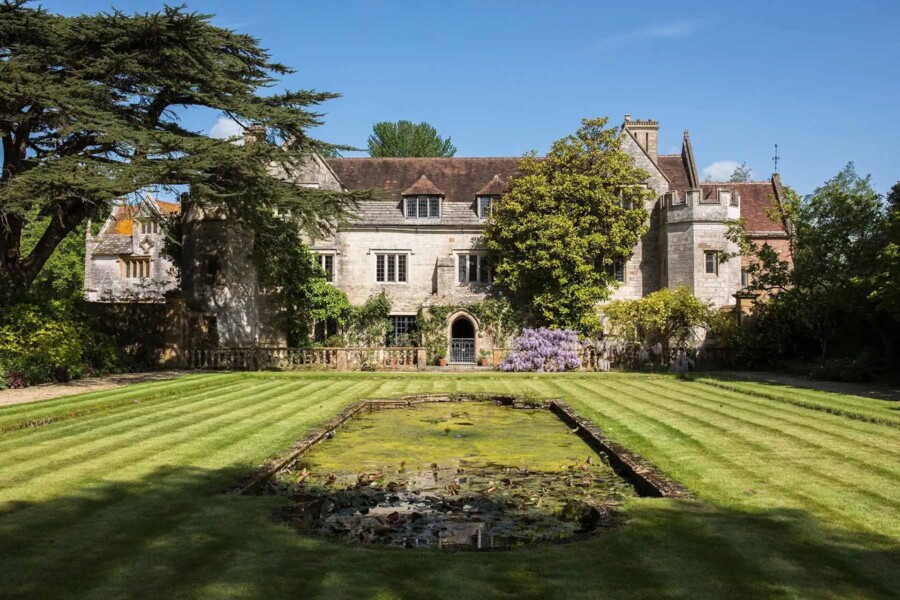
We have had the good fortune to be involved with the delivery of farm diversification and rural business projects with a very large budget available. We have also enjoyed visiting many other outstanding venues and examples across the UK where absolutely no expense has been spared. The results are invariably spectacular – creating luxurious, exclusive destinations that attract visitors from far and wide, simply dripping with character and shouting ‘premium.’
These are fantastic projects to be part of, but they can also create an unintended problem. Because they are so impressive, they can be intimidating, even off-putting, for anyone considering a more modest diversification project. Looking at a multi-million-pound farm attraction, wedding venue or hospitality business, it is easy to conclude that diversification is only for those with deep pockets.
So, is that really the reality of rural diversification?
The good news is that you can absolutely diversify on a budget.
We mean this in two ways. Firstly, there are many smaller-scale projects that can add significant value to farms and rural enterprises without requiring enormous levels of investment. Secondly, the larger and more ambitious projects can still be delivered successfully within a carefully controlled budget. Even where a lot of capital is available for a project, it is rarely infinite!
Before Exdell Ltd was founded, Directors Tracey and Lloyd both worked extensively in the property development industry. One of the most valuable lessons we brought with us is that successful developers are exceptionally good at making every pound work hard.
Every decision is tested against profitability. Expenditure is controlled rigorously, opportunities to increase value are actively pursued, and risks are identified and managed from the outset. This does not mean avoiding investment or being risk-averse. Property development is fundamentally about taking calculated risks. Rather, it requires focus, discipline and experience to avoid unnecessary expenditure whilst ensuring investment is directed where it will generate the greatest return. It also requires a sound understanding of the market, the region and the business.
Most farm diversification projects are not solely about profit. They also need to be enjoyable, reflect the character of the farm, support family objectives and create something owners can be proud of. Nevertheless, farms and rural enterprises are businesses – we believe the same principles of risk management, financial control and strong business management are just as important. Good diversification is not simply about creating something attractive; it is about creating something that can be delivered, operated and sustained successfully for many years to come.
All investment carries risk. In many cases, it is the perceived risk of a project that prevents people from taking the first step. Whilst most people recognise that rewards rarely come without some degree of risk, sensible planning and good project management can dramatically improve the chances of success.
A familiar example can be found on television. In what feels like every episode of Grand Designs, a couple begin with a carefully prepared budget. By the second advert break they have discovered unforeseen complications, doubled or tripled their expenditure, fallen months behind programme and are still debating which marble worktop to buy for their kitchen. Somehow, they always manage to find yet more money and go on to complete their dream home by the end of the episode.
The reality for most people is very different. Most businesses cannot simply find another chunk of cash when things go wrong, or double their budget because they want more expensive finishes than they originally allowed for. A diversification project is a business, and therefore needs to be profitable and financially sustainable. The objective should not be to spend more money than originally planned; it should be to achieve the best outcome whilst maintaining control of costs and risks throughout. An emphasis on cost control can make the difference between profit or loss in the crucial first years of a business operation.
Break projects into manageable stages
One of the most effective ways to control risk is to think about projects incrementally. A common mistake is to only look at the investment required to deliver an entire project, from concept to completion. Whilst this is clearly important, it is helpful to think of the project journey itself as a series of stages, with each stage progressively reducing risk and increasing certainty.
At Exdell, we often describe these stages as project “gateways”. Each gateway represents a defined milestone, such as completing a feasibility study, securing planning permission, finalising technical design or obtaining contractor pricing. A good feasibility study at the outset should test the basic viability of the idea against the site, the market and the budget, before significant money is committed to design or consultancy fees. Expenditure is linked to the successful completion of each gateway, rather than committing significant sums at the outset. This approach limits financial exposure, provides natural decision points and ensures that investment decisions are made only when the project has reached an appropriate level of certainty.
Obtaining planning permission, for example, requires time and money, but it significantly increases confidence that the project can proceed. Similarly, investing in detailed design, technical information and a well-considered specification may incur upfront costs, but it provides much greater certainty over buildability, programme and likely construction costs.
The further a project progresses through these stages, the fewer unknowns remain. Risks that initially seemed significant can be identified, assessed and either managed or eliminated altogether. This allows more informed decisions to be made about whether to proceed, modify the proposal or pause before committing further expenditure.
Rather than viewing diversification as a single large leap, we encourage clients to see it as a series of measured steps. By progressing through clearly defined gateways, risk can be managed systematically, confidence can be built over time and projects can move forward with far greater financial control.
Treat planning as a risk to be managed
Planning permission is often the single greatest risk facing a diversification project because it determines whether the project can proceed at all. Until that risk is understood, every pound spent elsewhere should be considered carefully. It is therefore so important to limit expenditure until there is some certainty over planning outcomes. A sound planning strategy might give a good level of confidence, allowing a project to proceed to the next stage. However, we see too many schemes that have incurred significant design and consultancy costs before fully understanding the planning constraints and opportunities associated with a site – which can lead to expensive unpicking and backtracking. Again, the ‘gateway’ process helps ensure the right expenditure at the right time, to keep costs down in those critical early stages of a project.
In some cases, permitted development rights – such as Class Q or Class R – may allow certain agricultural buildings to be converted without the need for a full planning application, which can significantly reduce both the time and cost involved. Whether this route is available depends heavily on the specifics of the site, so it is always worth getting clarity early. A good planning consultant can usually establish this within the first stage of a project, well before any significant design spend is committed.
Planning risk generally cannot be avoided, but it can definitely be understood and minimised, giving clients the best basis for decision making and the best chance of success.
Make use of available grant funding
Budget pressure does not always need to be carried by the project alone. A range of grant schemes exist to support farm and rural diversification, including Countryside Stewardship capital grants, the Sustainable Farming Incentive and the Farming Equipment and Technology Fund. Eligibility and available funding change regularly, so it is worth checking current guidance early in the project rather than assuming a particular scheme will or won’t apply. Where a project does qualify, grant funding can materially change what is achievable within a given budget, and can sometimes shift a project from “not viable” to “viable” on its own.
Invest in good design, not expensive design
Good design does not mean expensive design. The best projects – and designers – make intelligent use of existing buildings, site features, local character and materials to deliver excellence within the constraints set by the Client. Anyone can deliver amazing designs with an unlimited budget and no constraints. The real skill is working inside a set budget or project requirements.
Well-considered layouts improve operational efficiency. Attractive environments increase visitor appeal. Thoughtful design can reduce construction costs whilst simultaneously enhancing the customer experience.
Good design should be viewed as an investment rather than a cost.
Specify for the business, not the brochure
Simply not having a specification is one of the most common causes of budget overruns. It is so easy to overlook the cost of finishing, decorating and furnishing a completed project, or to underestimate the cost of doing so to the right level.
Specification is a business planning issue. Every element of a project should be carefully considered in terms of its contribution to the end objective. Customers may appreciate quality, but may not always notice the difference between a premium solution and a sensible, robust alternative. Understanding where to invest and where to save is critical – and this flows directly from the business plan and the Unique Selling Point of your business, including the target market it is pitched at. A luxury retreat, a family campsite and a wedding venue may all require very different levels of finish. The correct specification is not necessarily the most expensive one; it is the one that aligns with customer expectations and the business model.
Defend the budget
Unless your funds are genuinely unlimited, a budget should not be treated as an aspiration. It should be a genuine project constraint that informs decision-making throughout the process – not just your decision making but that of the consultants and professionals who help you deliver the project. This requires discipline. Every change, enhancement or additional feature should be assessed against its impact on both cost and overall project objectives.
Small decisions made repeatedly can quickly erode contingency allowances and push projects beyond their financial limits.
Define success before you start
Before spending any money, it is essential to be clear about the outcomes the project must deliver.
What are the non-negotiable objectives? Is the project intended to create a new income stream? Support succession planning? Generate employment? Enhance the value of the holding? Improve quality of life?
Clear objectives help prioritise expenditure and prevent resources being diverted towards features that may be desirable but are not essential.
Let the business plan drive decisions
A business plan should not simply be a document prepared for lenders or grant applications. It should be a working tool that informs decision-making throughout the project lifecycle.
Understanding likely costs, revenues, cashflow requirements and potential risks helps create realistic expectations and provides a framework against which progress can be measured. A diversification consultant or business adviser can be a useful sounding board at this stage, particularly for testing assumptions before they are built into the wider project.
The stronger the business case, the easier it becomes to make informed investment decisions.
Manage the project relentlessly
Even the best ideas can fail without effective project management.
Successful projects require clear decision-making, programme management, cost control and communication between consultants, contractors and stakeholders. Many budget overruns arise not because the original concept was flawed, but because changes were not controlled, risks were not identified early enough, or decisions were delayed. Strong project management keeps projects focused, accountable and financially controlled.
Perhaps the most important message is that successful diversification doesn’t have to be a competition to create the biggest, most expensive or most luxurious project. The spectacular, top-end products hold an important place in a wide market, with plenty of space for other products too.
The objective is not to spend the most money. It is to create a sustainable, enjoyable and profitable business that works for your circumstances.
Some projects require significant investment. Others can be delivered with modest budgets and a great deal of ingenuity. Many of the most successful rural businesses have grown gradually over time, responding to customer demand and reinvesting profits into future improvements. What matters is being clear about your objectives, managing risks effectively and ensuring every pound invested contributes towards the success of the project.
Diversification on a budget is not only possible. In many cases, it produces better decisions, stronger businesses and more sustainable long-term outcomes. Whilst unlimited budgets can be enjoyable, disciplined projects tend to be the ones that create lasting success.
Written by Lloyd Exley
Property and Development Specialist, Exdell Limited
Discover more and get in touch with Exdell Limited
Could your expertise support landowners exploring rural diversification? Join the rural diversification supplier directory
Explore more insights from the Rural Diversification Collective
Exdell Limited
How can I find out what my land could really be worth?
Jonny Bann Consultancy
How can I fill midweek gaps at my venue with corporate bookings?
Jonny Bann Consultancy
How can I make better use of my venue’s existing assets for the corporate market?
SPASE Architects & Surveyors
How energy retrofit can make a heritage building work as a rural business
Dudley Peverill Associates LLP