Multiple income streams in rural diversification: how Lady Heyes built a resilient rural business over three decades
How a Cheshire holiday park combined touring, glamping, retail and padel courts on 15 acres of Green Belt land to create a business that adapts as markets change
12 May 2026
Lady Heyes Holiday Park
Lady Heyes Holiday Park & Attraction Village Kingsley Road, Frodsham, Cheshire WA6 6SU
Lady Heyes Holiday Park near Frodsham shows how rural diversification built gradually across multiple income streams creates more resilience than any single project could achieve alone
When Tony Faulkner purchased a former animal research centre near Frodsham in Cheshire in 1996, he did not arrive with a masterplan. He had been visiting the site in connection with a pheasant hatchery business and only became aware it was for sale after overhearing a conversation during one of those visits. The deal that followed, structured as a staged payment arrangement that made the purchase possible, was the beginning of what is now a 15-acre attraction village and holiday park operating across tourism, retail, leisure and accommodation.
Nearly three decades later, Lady Heyes is one of the more instructive rural diversification examples in the sector. Not because it followed a clear strategy from the outset, but because it demonstrates something more practically useful: how a rural business can be built gradually, with each new income stream added when the land, the planning context and the market align to make it viable.
From craft village to touring park: building the first income streams
The first diversification at Lady Heyes had nothing to do with tourism. Using a rural grant available at the time for the conversion of existing rural buildings, Tony converted the former research centre’s standalone buildings into a craft and antique restoration centre. The site already held a licence for a chimney, which allowed a pet crematorium to be established alongside it as another early business. These uses brought visitors and rental income to the site before a single touring pitch existed.
Tourism came later, and it was not easy to achieve. An application for a touring park was submitted in 2007, but gaining consent on Green Belt land proved difficult. A narrow window in planning policy that permitted limited tourism development eventually made approval possible, and the park opened in 2011. That consent was a turning point. It gave the business a reliable income foundation on which everything that followed could be built.
The touring park now provides around 85 pitches for caravans, motorhomes and campers and remains a central part of the operation. Having a steady flow of visitors established the commercial logic for every subsequent addition to the site.
Glamping farm diversification: designing for durability
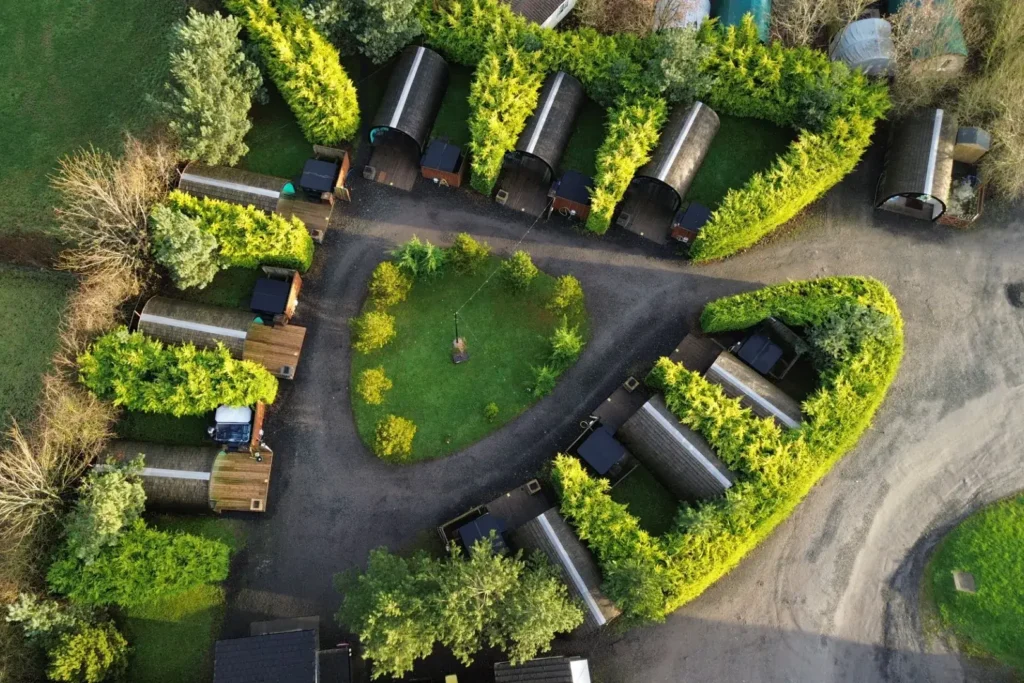
The first glamping pods at Lady Heyes replaced older agricultural buildings on the site. Tony designed the original structures himself, using welded steel frames chosen for durability and year-round suitability rather than appearance alone. The reasoning was straightforward: accommodation that could not withstand heavy use would generate maintenance costs that eroded the margin the pods were designed to create.
Hot tubs were added early, at a time when very few parks were offering them as standard. Demand proved far stronger than expected. The combination of simple accommodation with a premium feature quickly became one of the most commercially successful parts of the business and shaped the direction of everything that followed: offer different levels of stay at different price points on the same site, and both occupancy and average spend increase.
Further planning consents allowed additional pods to be built over time, including larger and more private units aimed at couples and families seeking a higher standard of stay. Feedback from guests played a direct role in shaping these decisions. Newer units were designed with more space, more privacy and facilities suited to longer visits. The touring park and glamping operation now sit alongside each other, serving different visitor profiles while making full use of the same land.
Adding retail, padel and leisure: how each income stream strengthens the others
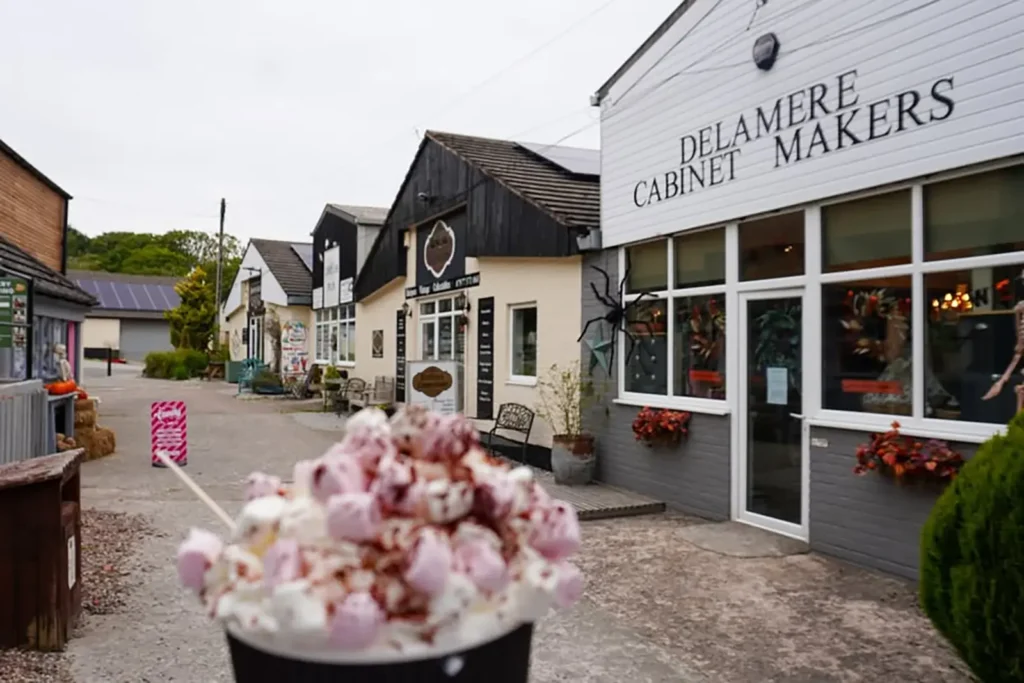
The attraction village, established before the touring park existed, proved an unexpected advantage once tourism arrived. Guests staying on site had places to eat, shop and spend time without leaving, while the retail units continued to attract day visitors throughout the week independently of the park’s occupancy. Rental income from the units provided stability even when tourism was quieter, creating a landlord income stream that operated on different commercial rhythms to the accommodation.
The village has evolved steadily since its early focus on antiques and restoration, moving towards a broader mix of retail, food and experiences suited to a wider audience as visitor expectations have changed.
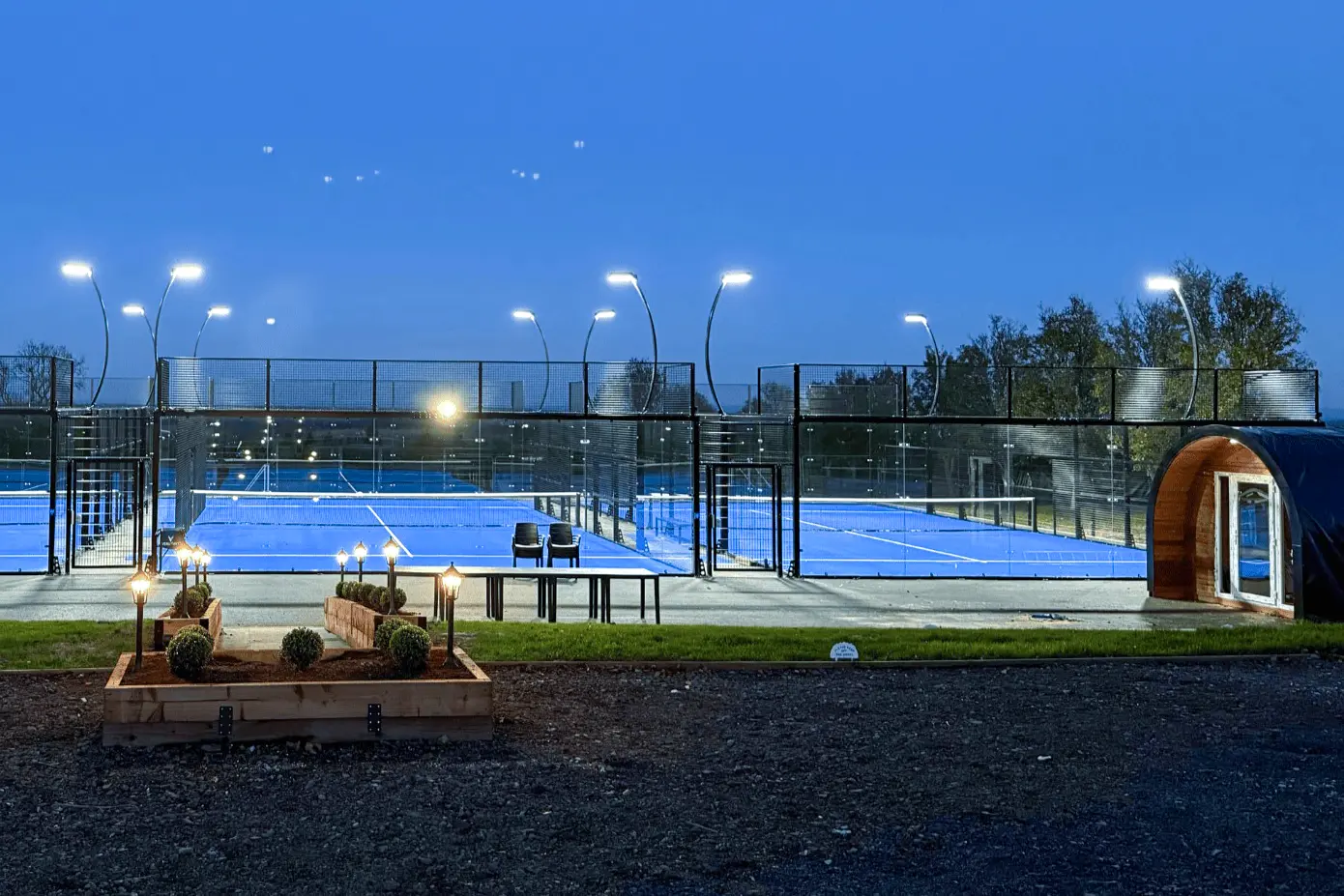
The most recent addition to the site is three outdoor padel courts, introduced after Mitch Faulkner observed how popular the sport had become in Spain and recognised the opportunity to attract both holiday guests and local players. The courts generate activity outside the main holiday season through coaching sessions and corporate bookings, adding a leisure income stream that operates independently of accommodation occupancy. A fitness and studio space added alongside the courts has moved the site’s overall offer further towards a wellness and leisure proposition, reflecting a direction of travel seen across a growing number of rural diversification projects.
Each addition at Lady Heyes has been designed to work with what was already there. The same 15 acres now supports several distinct businesses, each serving a slightly different market, each helping to offset the seasonal or cyclical risks of the others.
Green Belt rural diversification: planning as a long-term discipline
Developing multiple income streams on Green Belt land has required a consistent and patient approach to planning. Every change at Lady Heyes has involved careful assessment of what is likely to be acceptable before any application is submitted, and the site has been developed with the support of the same planning consultants, ecologists and local advisers over many years.
Those long-term relationships have made a material difference. Understanding how local policy is changing, which constraints apply to which parts of the land, and how new proposals can be shaped to have the best chance of consent is knowledge that accumulates over time and cannot easily be bought project by project.
Ecology has become a routine part of the process. Habitat surveys, hedgerow retention, additional planting and biodiversity net gain requirements now form part of most applications on land of this designation. Planning costs can reach tens of thousands of pounds before construction begins, which makes the quality of pre-application work directly relevant to whether a project remains financially viable. Many of the consultants and specialists who support this kind of work can be found in the Rural Diversification Directory.
Controlling costs alongside creating income
One of the less discussed aspects of Lady Heyes’s development is the equal attention given to controlling the cost of running the site alongside the creation of new income streams. As the business has grown, so have the demands on power, water and infrastructure.
A private sewage treatment system allows the park to operate independently of local capacity constraints, removing a limitation that commonly restricts rural diversification projects in the Green Belt and open countryside. Solar panels installed across site buildings now generate a significant proportion of the electricity the park requires. The intention has been to reduce operating costs and improve self-sufficiency rather than to generate export income, protecting the business from rising energy prices across tourism and leisure operations that are inherently energy-intensive.
These practical infrastructure decisions receive less attention than new buildings or accommodation, but their impact on long-term viability is comparable. A rural diversification project that controls its running costs is considerably more resilient than one that depends on increasing turnover each year to remain viable.
Farm diversification lessons from Lady Heyes
Several observations emerge from nearly three decades of development at Lady Heyes that are directly applicable to landowners considering how to make land pay through diversification.
Resilience comes from a portfolio of income streams, not a single project. Tourism remains the main activity at Lady Heyes, but the combination of retail rental, day visitors, leisure facilities and accommodation at different price points means the business is not exposed to any one market or season. Each strand supports the others.
Gradual development reduces risk and improves planning outcomes. Each addition at Lady Heyes was built on demonstrated demand from the previous stage, designed to complement what already existed and shaped with an understanding of what the planning context would permit. The result is a site that has grown substantially without the setbacks that come from pushing too far too fast.
Investing in infrastructure is as important as investing in new income streams. The sewage system and solar installation are not visible to guests, but they underpin the commercial viability of everything that is. Landowners who treat infrastructure as a secondary consideration often find it becomes a constraint on growth rather than an enabler of it.
And changing visitor expectations are a commercial opportunity rather than a complication. The move from basic touring to glamping with hot tubs, from antiques to food and experiences, from holiday park to wellness and leisure destination: each shift reflected demand that was already there, waiting to be met. Staying close to what guests are asking for, and being willing to develop the site in response, has been one of the consistent themes of Lady Heyes’s success.
For more rural diversification examples and farm diversification ideas across a range of property types and scales, explore the features section of this site. Landowners planning new income streams can find specialist planning consultants, ecologists and advisers through the Rural Diversification Directory.
Further information about the park, accommodation and on-site facilities can be found at https://www.ladyheyespark.com
Written by Adam Gray
Joint Founder of The Rural Diversification Collective
How farms, estates and rural businesses are diversifying
From working farms to landed estates and rural businesses, these features explore how landowners across the UK are diversifying through glamping, events, vineyards, holiday lets, wellness retreats and more. Each one shares the thinking, decisions and experience behind a real project.
Rural Diversification Collective
A tourist tax with no cap, no coordination, and no idea who it will hurt
Rural Diversification Collective / The Glamping Show
Rural diversification takes centre stage as The Glamping Show partners with the Collective

Rural diversification events to bring landowners, farmers and rural experts together
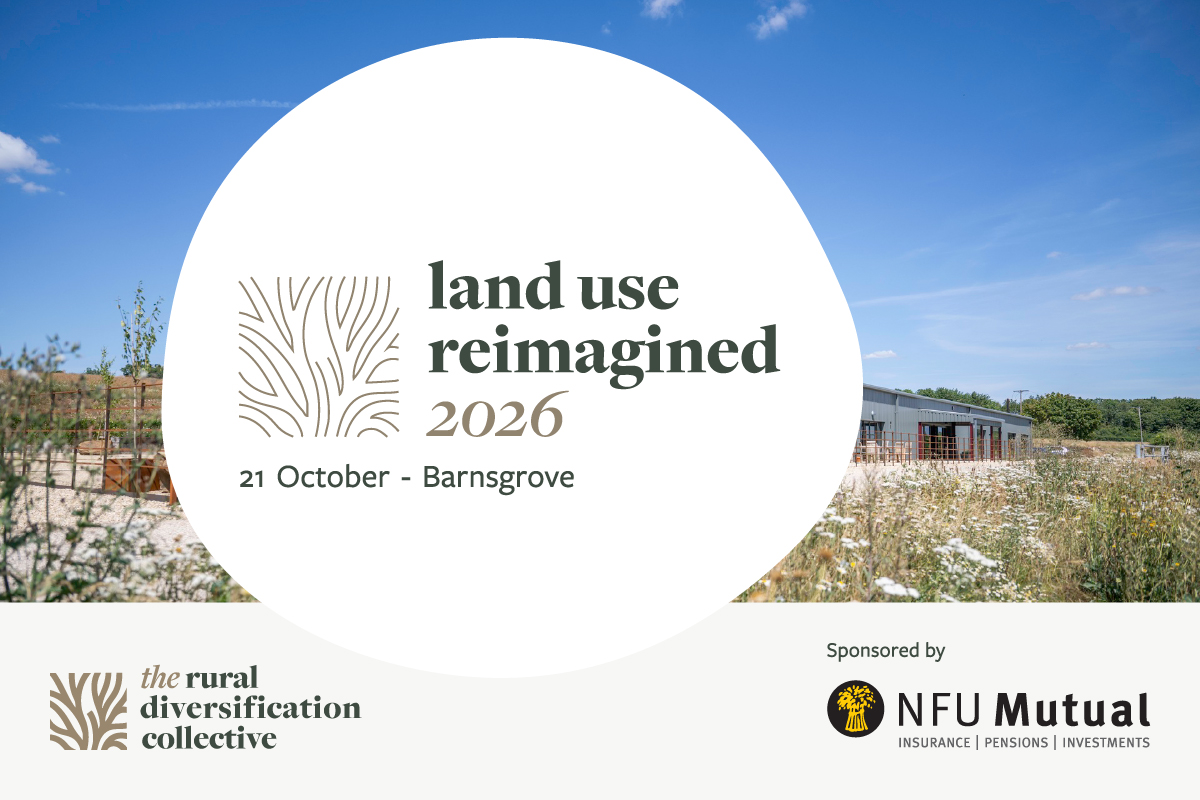
Land Use Reimagined 2026 - Rural Diversification
A focused day exploring heritage, hospitality and new uses for rural land, bringing together estate owners, planners, designers and rural specialists at a working example of successful diversification.
21 October 2026, 10:00 am
White Ln, Basingstoke RG29 1GF, UK
Search the Directory
Search the directory to find trusted consultants, advisers and specialists working with farms, estates and rural businesses across the UK. From planning and finance to design, tourism, hospitality, land use and beyond, every listing is focused on rural diversification and rural enterprise.
Are you a rural specialist? Register to be listed