Why nature-based tourism is farmers’ and landowners’ best shot at surviving BPS cuts
Average cereal farm income is forecast to fall to just £17,000 this year, the lowest on record, and the old income streams aren't coming back. Kate Russell, Jess Bradley and Dawn Woollam discuss in this blog how for rural landowners willing to think differently, the British countryside itself is the asset: a wildflower meadow, a restored wetland, or an ancient woodland isn't just an environmental project, it's a tourism product people are desperately searching for and a funding mechanism for those willing to be entrepeneurial.

Rural Diversification Insights from Dudley Peverill Associates LLP
11 May 2026
Let us start with something that should be obvious but somehow still gets overlooked: the British countryside is one of the most commercially valuable assets we have. Not just for food production, not just for carbon sequestration or biodiversity credits, but as a destination. A place people genuinely, desperately want, and almost certainly need, to spend time in, a point I want to labour to those who have the pleasure of calling these places ‘home’.
In modern-day life, especially as AI accelerates the rush for efficiency, there is a growing awareness of everything we are losing, and of the quiet benefits of things that were once just, well, life. The walk to work was replaced by the drive, then by working from home. Teenage afternoons in the park gave way to house-bound gaming. Green space is fast being swallowed by infill urban development. It’s fair to say that humankind is being starved of its most basic life support.
But something is shifting. There is a growing consciousness of this loss, and a deep, purposeful search by an increasing number of people, to reclaim those nature-based experiences that were once simply woven into the fabric of daily life. Nature-based tourism is not a new concept. But right now? It’s booming, it’s a commodity and it’s not going anywhere.
Rural tourism accounts for somewhere between 70 and 80% of all domestic UK tourism and adds over £14.5 billion to the economy of England and Wales alone. Walk into any glamping booking platform on a Friday morning and try to find a woodland cabin within 90 minutes of a major city for that weekend. Chances are, you won’t find one. The demand has been there for years, quietly growing, and it shows no signs of slowing down.
And farmers need it now more than ever. The financial reality for farming businesses in England is stark. Direct payments under the Basic Payment Scheme (BPS), once worth around £1.8 billion a year to the sector, are now nearly entirely gone, with delinked payments ending entirely after 2027.
According to Defra, the money is being recycled into Environmental Land Management (ELM) schemes, which will rise to over £2 billion a year by 2028-29, most of it routed through the Sustainable Farming Incentive (SFI), alongside Countryside Stewardship Higher Tier and Landscape Recovery (not including capital grant schemes). On paper, they see this as a like-for-like swap but in practice, the transition has been bumpy, with the new SFI26 opening to applications this June, coming with a £100,000 annual cap per farm business, meaning historic BPS recipients above that level can never fully recover the income.
The numbers are startling, and probably not new-news for anyone reading this today. According to Defra’s latest Farm Business Income forecast (March 2026), average income on cereal farms in 2025/26 is expected to fall by two-thirds to £17,000, the lowest level since records began in 2004/05. Defra also acknowledges that the currently expected 10% rise in diversified output won’t be enough to offset the combined hit from lower direct payments and reduced agri-environment income.
According to Baroness Minette Batters’ Farm Profitability Review (December 2025), production costs will be 30% higher in 2026 than they were in 2020, while the £2.4 billion farming budget has been broadly flat since 2007. The Review explicitly recommends planning reforms to make it easier for farmers to diversify, recognition, at the highest level, that diversification is no longer a “nice to have”, but an essential part of farm survival.
It’s all fairly head in hands stuff, but for many rural landowners, tourism is the most accessible, most scalable, and most immediately viable route to filling that gap & it makes use of the natural splendor of the land where it exists or can be created.
So why are so many landowners still sitting on the opportunity? It’s the conversation I seem to have on loop, and the urgency behind it is only growing. In our experience, three things tend to hold people back. First, overwhelm: too many options, and too little commercial certainty about which would actually deliver the best return on investment. Second, planning: a chronic lack of clarity (a phrase I find myself using constantly when talking about our planning system… I’ll save that rant!) around the path of least resistance to getting a scheme approved. And third, cost: inflation and the prohibitive price of traditional construction methods have made many landowners wonder whether the numbers can ever stack up.
They can. But now more than ever you need to approach each of those barriers with your eyes open. Below, we deal with the first of the three barriers.
Barrier One: Which Option Actually Makes Money?
There’s a genuine shift happening in how the countryside is being valued and managed. Natural capital projects including Biodiversity Net Gain (BNG) schemes, carbon sequestration, habitat restoration, and agri-environment agreements, are starting to reframe land as something more than an agricultural unit. Whereas previously tourists were a logistical nightmare on most working farms, liability risks, machinery, livestock, a less intensive, nature-led management system changes that dynamic entirely. Suddenly, visitors aren’t a nuisance. They’re the opportunity.
Here’s the thing: a well-managed wildflower meadow is also a carefully curated walk-through, sit-by, learn-in or watch-over experience. A restored wetland is a wildlife-watching frenzy. Ancient woodland managed for carbon is exactly the kind of setting that commands £200 a night for a shepherd’s hut, forest bathing, or an authentic wood-fired sauna. Nature-based tourism and natural capital aren’t in competition, they’re made for each other & stack perfectly with one another.
“When you develop tourism alongside a natural capital project, the land is doing multiple things at once: generating ecosystem payments, providing carbon or biodiversity credits, and attracting visitors who want to feel and understand the difference. That’s a much stronger investment case than either income stream in isolation.”
Globally, the rural tourism market is forecast to nearly double by 2035, growing at over 8% annually, driven precisely by the trend toward eco-conscious, off-grid, nature-immersive travel. Closer to home, searches for “farm experiences” and “farm shop holidays” increased by 36% and 54% respectively between 2019 and 2023. The market is telling us something. Loudly. We should probably listen!
Stacking Income Streams on a Norfolk Estate
Tellus Natural Capital and Nicholsons were appointed to develop a natural capital appraisal of a private estate in Norfolk.
The natural capital appraisal, completed by the Nicholsons’ team, identified a significant area of the estate with strong potential for commercially viable woodland creation, along with possible habitat bank creation. The land was well-suited to these opportunities due to it performing poorly for arable farming. Kate investigated the potential for building a mosaic of nutrient neutrality and BNG opportunities, providing substantial upfront payments in return for long term land management contracts.
The proposal to enhance that currently unassuming part of the estate, transforming it from unremarkable farmland into a genuinely beautiful, species-rich landscape with sensitively designed woodland areas, provided for a secondary opportunity: a compelling case for ecotourism, sitting alongside and benefitting from the BNG scheme.
At Dudley Peverill Associates, our role is to appraise existing, and potential new property assets for complementary diversification opportunities, modelling them properly and putting a number on them. That means undertaking commercial feasibility work to determine whether investing BNG receipts into tourism infrastructure, rather than simply holding them, could deliver a far stronger long-term return: one capable of sustaining the farm and generating cashflow to fund future projects.
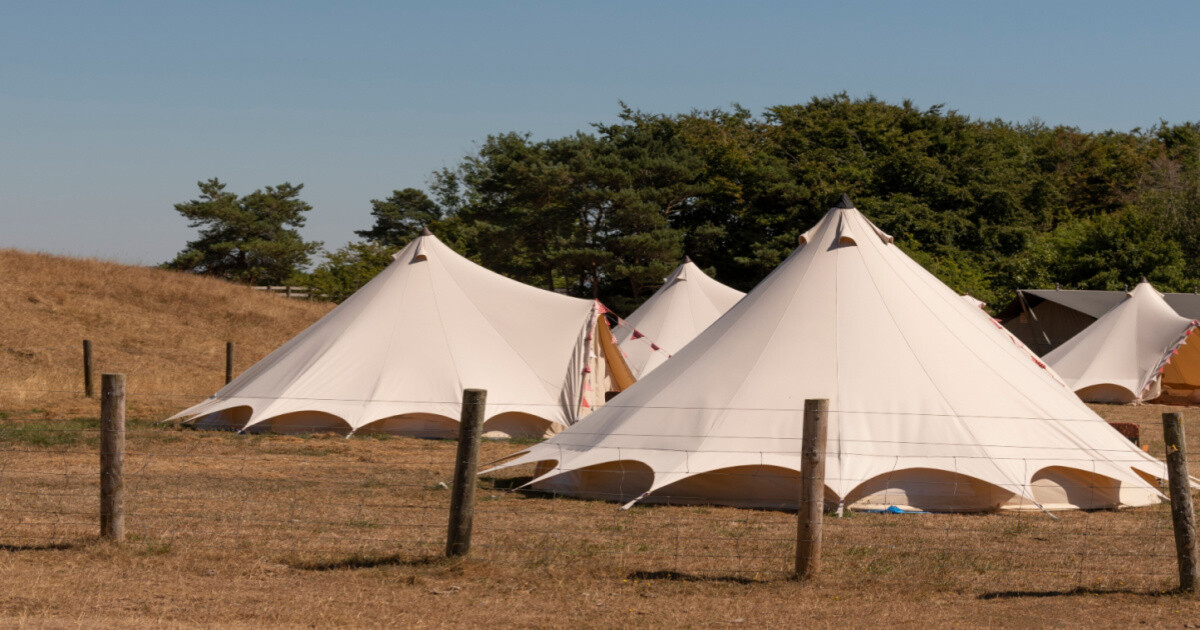
The opportunity we keep returning to is eco-tourism. Holiday units overlooking a thriving, biodiverse habitat don’t just generate income, they create a reason to revisit. The story of land transitioning from agriculture to wildlife mecca is a compelling one, and guests who engage in habitat management during their stay are far more likely to return periodically to see its progress first-hand.
It’s a good illustration of what’s possible when the natural capital, ecosystem services, and commercial tourism strands are considered together from the outset, and of why the relationship between Tellus Natural Capital, Nicholsons and Dudley Peverill Associates works as well as it does. Each of us brings a different lens to the same piece of land, and the result is always a stronger, more integrated opportunity than any one discipline would have arrived at alone.
The financial case for integrating natural capital and nature-based tourism has never been stronger, the real opportunity lies in treating them as a single, joined-up investment rather than two separate decisions made in sequence.
But identifying the opportunity is only half the battle. In the next instalment, we’ll turn to the next two barriers that stop too many promising projects from ever getting off the ground: how to make the construction economics actually work without overcapitalising, and how to navigate a planning system that, which at its best, seems designed to hinder exactly the kind of thoughtful rural diversification the countryside needs. If you’ve ever received a quote that made the numbers fall apart, or lost months to a planning process that felt arbitrary and inconsistent, the next piece is for you.

Written by Dawn Woollam
Senior Consultant, Dudley Peverill Associates LLP
Discover more and get in touch with Dudley Peverill Associates LLP
Could your expertise support landowners exploring rural diversification? Join the rural diversification supplier directory
Explore more insights from the Rural Diversification Collective
Exdell Limited
How can I find out what my land could really be worth?
Jonny Bann Consultancy
How can I fill midweek gaps at my venue with corporate bookings?
Jonny Bann Consultancy
How can I make better use of my venue’s existing assets for the corporate market?
SPASE Architects & Surveyors
How energy retrofit can make a heritage building work as a rural business
Dudley Peverill Associates LLP