Can I use permitted development as a fallback if my planning application gets refused?
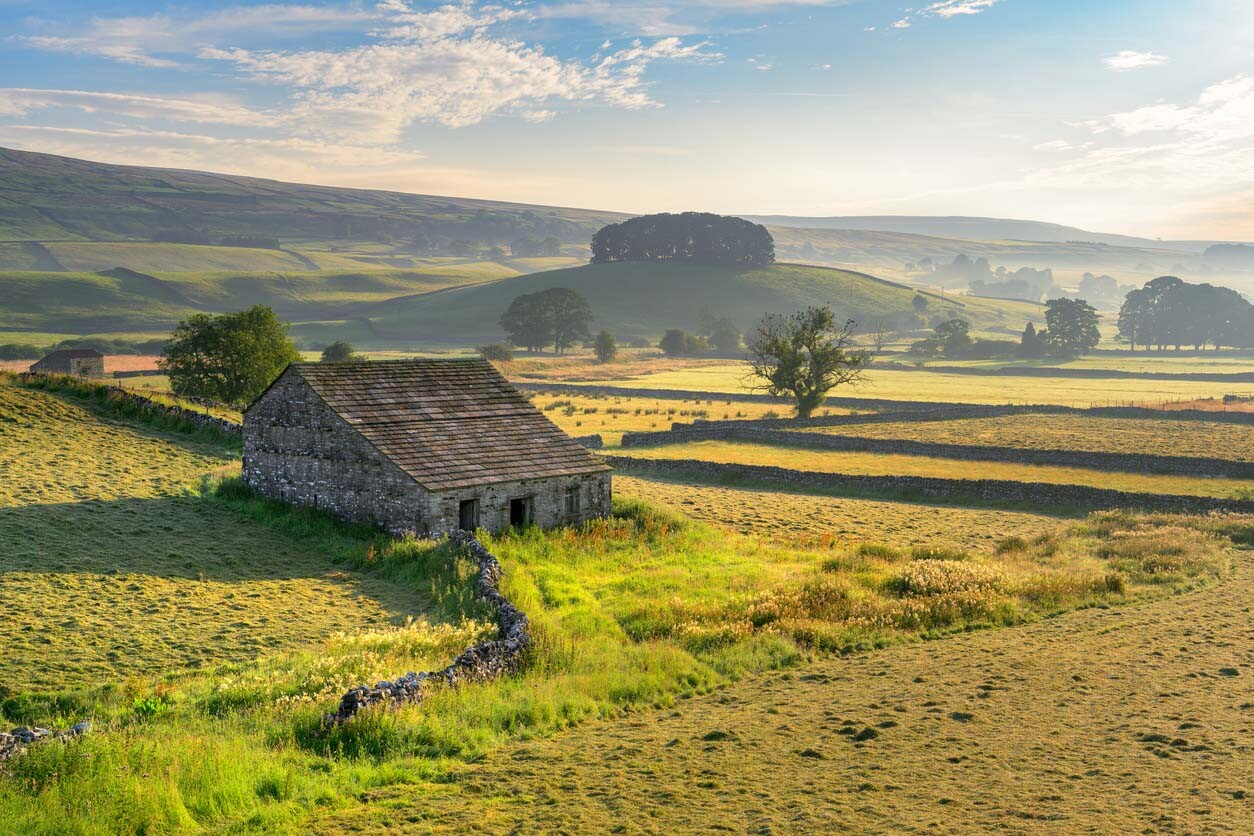
Yes. Class Q and Class R permitted development rights let you secure a lawful "fallback" use for a rural building, a dwelling or a flexible commercial use, before you apply for anything more ambitious. If the bigger scheme is refused, you're not left with nothing: you already hold something deliverable. It turns a high-stakes, all-or-nothing application into a staged, lower-risk strategy.

Rural Diversification Insights from Dudley Peverill Associates LLP
3 August 2026
Rural diversification is rarely straightforward. Policy shifts between one local election and the next, and the planning system, particularly in sensitive locations, can feel as though it asks more questions every time you try to move forward.
In that environment, most rural businesses know they need options. What’s less widely recognised is how to structure those options so they genuinely protect you if the plan is constrained from the outset and the conventional route looks high risk.
One of the most underused tools here is the General Permitted Development Order (GPDO), particularly Class R and Class Q, not just as a standalone planning route, but as a fallback position sitting quietly in the background.
Permitted development is usually treated as a limited route in its own right, and that’s a fair view: it’s cheaper and quicker than a full application. But it can also be applied first, to establish the principle of an alternative use on a site where constraints would otherwise reduce the odds of full planning permission first time. With that baseline in place, a full application can then be pursued with a stronger chance of success, potentially extending to a more ambitious scheme.
This changes the position from all-or-nothing to something far more measured. If the larger scheme is approved, you take it. If it’s refused, you haven’t lost momentum: you already hold something lawful and deliverable.
Class Q permits conversion of agricultural (and now former agricultural) buildings to dwellings, including the conversion works. Class R allows change of use to flexible commercial use, offices, shops, cafés, leisure, storage, but covers the change of use only, with building works needing separate consent. Part 6 (Class A and B) is different again: it builds new agricultural infrastructure rather than changing use, often freeing up an older building elsewhere on the holding. None of these rights is unrestricted. Each carries conditions, area limits, and a prior approval process. But where a scheme sits within those parameters, the principle is already established.
Take a redundant barn in Flood Zone 3, which the owner wants to bring into use as visitor accommodation. A full application for that use is rarely straightforward: overnight accommodation sits in the same vulnerability bracket as housing, so the proposal must pass the sequential test and, if that fails, the exception test. The principle of development can fail before the scheme’s merits are even reached. Now take a barn in open countryside, earmarked for office space. Here new commercial development in an unsustainable rural location, more acutely in the Green Belt, runs against policy, and a full application asks the authority to accept the principle of development from a standing start.
Permitted development approaches both differently, because the principle of the new use is granted by the Order rather than argued for. On the flood-zone site, the question narrows to whether this specific building can be made safe. In the countryside, Class R sidesteps the argument about the principle of new commercial development altogether. The bar is still there, but it’s materially lower than a full application has to clear.
Before any planning work begins, a more basic question needs answering: does the scheme pay? Permitted development structures risk, it doesn’t create a return. A barn that doesn’t stand up as a dwelling or lettable space isn’t improved by securing a fallback for it. Build cost, end value, funding and operating return belong at the outset, not after fees have gone into drawings.
With the business case established, the project can be structured in layers rather than committed to in one move. Step one is to secure the fallback: a prior approval under Class Q or Class R fixes the principle of the new use. Step two is to pursue the ambition: a full application for what permitted development doesn’t reach, the holiday-letting use itself, a larger dwelling, or a fuller commercial scheme. Throughout, the permitted position stays live. If the full permission is refused, the fallback remains, a lawful dwelling or consented commercial use to build on.
The result isn’t two schemes side by side. It’s a different risk profile, and that’s where the value sits. Without a fallback, a full application can feel like a gamble, fees committed upfront with no assured return. With one secured, the downside is capped and a more ambitious scheme becomes far easier to justify.
For many farms and estates, the opportunity lies not only in finding the right scheme, but in choosing the right path towards it. Structuring a project this way takes judgement on where the fallback genuinely holds value, and where it doesn’t. At Dudley Peveril Associates LLP, this is the kind of work we do day to day: appraising a building or site, testing whether a permitted development route stacks up commercially, and setting the wider planning strategy around it so a project is never left exposed to a single outcome. If you’re weighing up a constrained site and unsure where to start, we’d be glad to talk it through.

Written by Callum Horne
Rural Development & Property Consultant, Dudley Peverill Associates LLP
Discover more and get in touch with Dudley Peverill Associates LLP
Could your expertise support landowners exploring rural diversification? Join the rural diversification supplier directory
Explore more insights from the Rural Diversification Collective
Exdell Limited
How can I find out what my land could really be worth?
Jonny Bann Consultancy
How can I fill midweek gaps at my venue with corporate bookings?
Jonny Bann Consultancy
How can I make better use of my venue’s existing assets for the corporate market?
SPASE Architects & Surveyors
How energy retrofit can make a heritage building work as a rural business

Smart Wave Business Support